
A Maine & New Hampshire Homeowner’s Guide to Roof Types
If you’ve ever searched “what are the different types of roofs,” you probably found a long list of roofing terms that all start to blend together.
Helpful? Kind of.
Overwhelming? Definitely.
Here’s the simpler way to think about it: when people talk about the different types of roofs, they’re usually talking about one of two things.
- The roofing material — what your roof is made of, like asphalt shingles, metal roofing, EPDM, or TPO.
- The roof shape or style — how your roof is built, like gable, hip, flat, gambrel, shed, or saltbox.
Both matter. But for homeowners in Maine and New Hampshire, there’s a third piece that matters just as much: how that roof performs in New England weather.
A roof here has to do more than look good from the street. It needs to handle snow, ice, heavy rain, coastal moisture, wind, freeze-thaw cycles, moss growth, and nor’easters.
That’s why the best roof type is not the same for every home.
A classic Maine Cape may be a great fit for architectural shingles. A barn, garage, or camp might make sense with metal roofing. A low-slope porch or addition may need a flat roofing system like EPDM or TPO instead of traditional shingles.
At C.M.L. Roofing & General Contracting, our roofing and exterior remodeling services in Maine and New Hampshire are built around that exact idea: matching the right solution to the home, the budget, and the weather it has to handle.
This guide breaks down the main types of roofing materials, the most common roof shapes, and how to think about roof options specifically for homes and buildings in Southern Maine and New Hampshire.
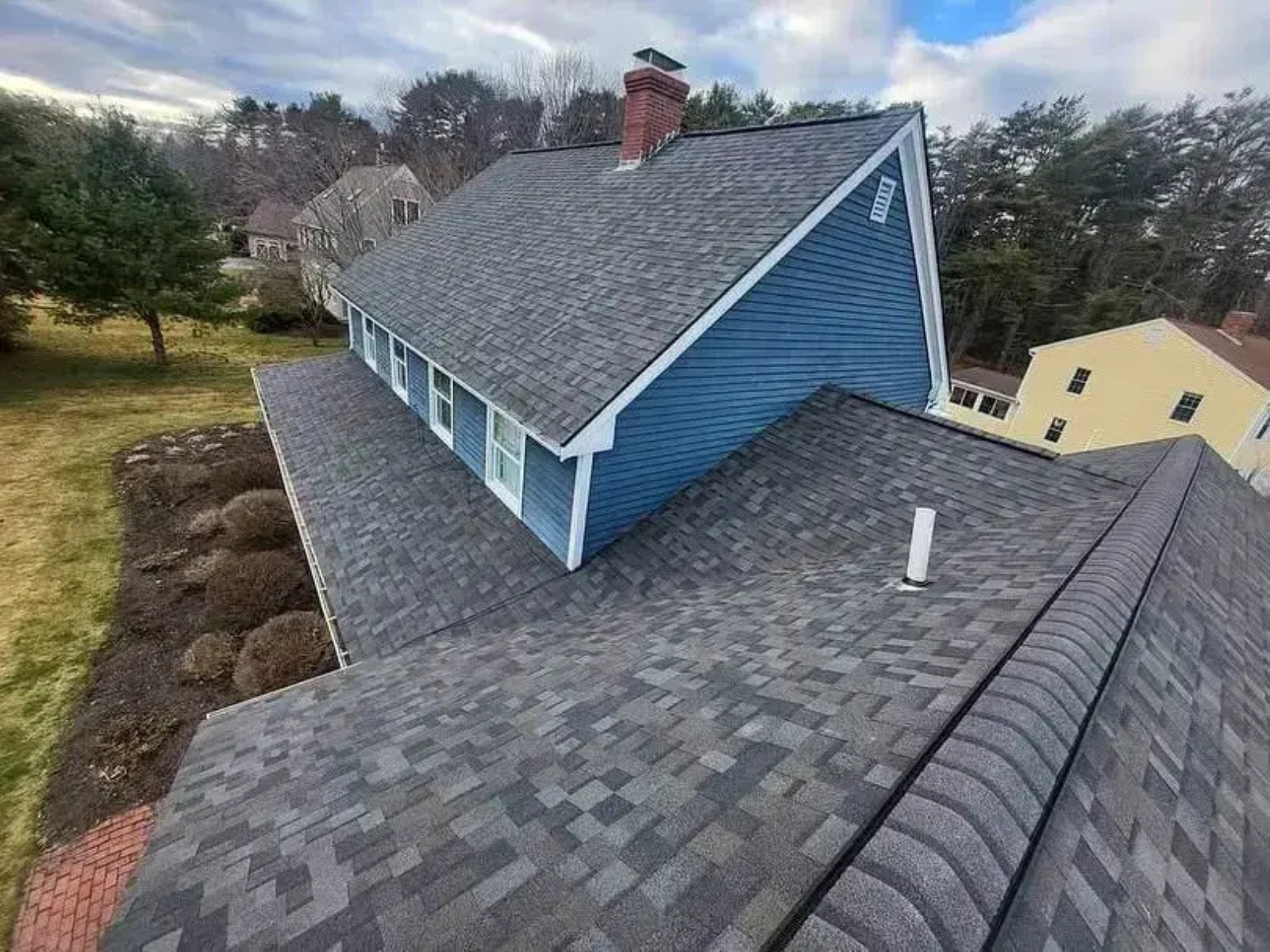
The Quick Answer
Roofing Materials
- Asphalt shingles
- Architectural shingles
- Premium/designer shingles
- Metal roofing
- Standing seam metal
- Exposed fastener metal
- EPDM rubber roofing
- TPO roofing
- Slate
- Cedar shake
- Synthetic or composite roofing
Roof Shapes & Styles
- Gable roofs
- Hip roofs
- Gambrel roofs
- Flat or low-slope roofs
- Shed roofs
- Saltbox roofs
- Mansard roofs
- Complex rooflines with dormers, valleys, chimneys, or skylights
The right choice depends on your roof’s slope, style, budget, location, and weather exposure.
CML’s take: Roof type is not just a style choice. It is a performance choice. The right roofing system should fit the home, the budget, and the conditions we see across Maine and New Hampshire.
First, What Do We Mean by “Type of Roof”?
Before we compare roof options, it helps to separate two things homeowners often mix together: roof material and roof shape.
They both matter, but they are not the same.
A roof material is what protects the home from the outside. This includes asphalt shingles, metal roofing, EPDM, TPO, slate, cedar shake, and other products.
A roof shape is the structure underneath. This includes gable, hip, flat, gambrel, shed, saltbox, and other roof styles.
For example:
- A home can have a gable roof with asphalt shingles.
- A barn can have a gambrel roof with metal roofing.
- A porch addition can have a low-slope roof with EPDM rubber roofing.
- A coastal home can have a hip roof with premium architectural shingles.
So as you compare the different types of roofs below, think of it less like picking a product off a shelf and more like matching the right roofing system to the home.
The Most Common Types of Roofing Materials
For most homeowners, the material is where the real decision starts.
Roofing material affects the look of your home, the cost of the project, the expected lifespan, the maintenance needs, and how well the roof stands up to local weather.
Most residential and commercial roofing projects come down to a few main categories:
- Shingles
- Metal roofing
- Flat roofing membranes
- Specialty roofing materials
CML’s roofing services include several of these options, from architectural shingles and metal roofing to flat and low-slope systems.
Let’s start with the one most homeowners are already familiar with.
Asphalt Shingle Roofs

Asphalt shingles are one of the most common roofing materials for homes in Maine, New Hampshire, and across the country.
They are popular because they offer a strong balance of cost, performance, appearance, and availability. For many homeowners, asphalt shingles are the practical middle ground: not the cheapest-looking option, not the most expensive roof you can buy, but a strong fit for everyday residential roof replacement.
Asphalt shingles work well for:
- Primary homes
- Capes, colonials, ranches, and split-levels
- Roof replacements on a realistic budget
- Homeowners who want solid curb appeal without jumping to metal or slate
- Roofs with a standard pitch
- Many Southern Maine and New Hampshire homes
That said, not all asphalt shingles are the same.
3-Tab Shingles
3-tab shingles are the older, flatter style of asphalt shingle. They have a more uniform look and are usually considered the most basic shingle option.
You may still see them on older homes, garages, sheds, and budget-focused projects, but they are not usually the first choice for homeowners looking for better curb appeal or stronger long-term performance.
For a main home in Maine or New Hampshire, many homeowners today choose architectural shingles instead.
Architectural Shingles
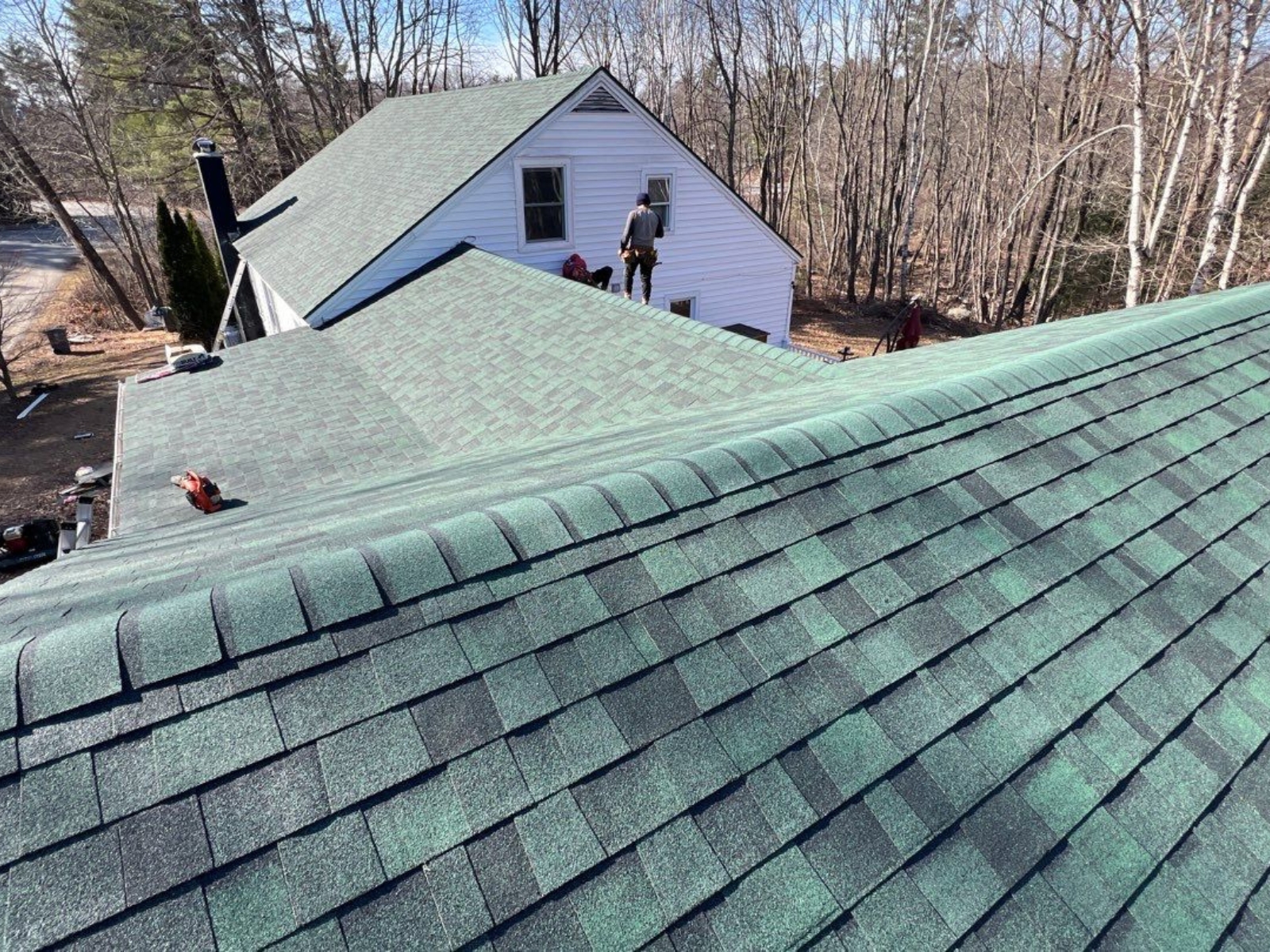
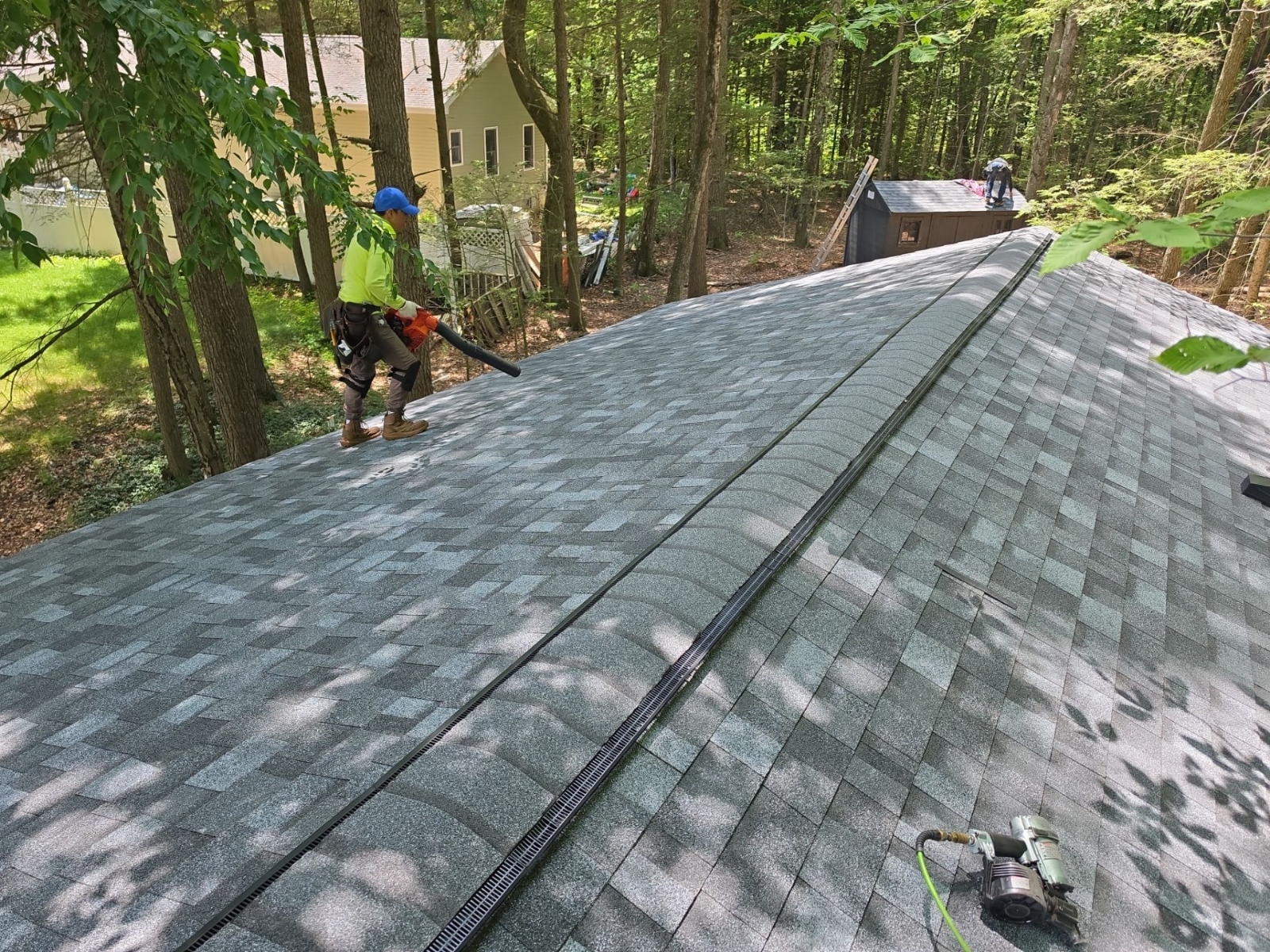
Architectural shingles are the upgraded version most people picture when they think of a modern asphalt roof.
They have more depth, more texture, and a more dimensional look than 3-tab shingles. Instead of lying completely flat visually, they create shadow lines that give the roof a stronger, more finished appearance.
Architectural shingles are often a great fit for New England homes because they balance:
- Cost
- Durability
- Curb appeal
- Weather performance
- Style options
- Long-term value
For many homeowners, this is the sweet spot.
At C.M.L. Roofing & General Contracting, this category includes value-focused architectural shingles such as IKO shingles, along with trusted options from brands like Owens Corning and CertainTeed Landmark.
Premium and Designer Shingles
Premium shingles take the architectural shingle idea a step further.
They are often heavier, thicker, more dimensional, and designed to create a more elevated look. Some are made to mimic the appearance of slate, cedar shake, or other high-end roofing materials without going all the way into those premium categories.
Premium shingles may be a good fit for:
- Higher-end homes
- Historic-inspired New England homes
- Coastal properties
- Homes with strong curb appeal goals
- Homeowners planning to stay in the home long-term
- Rooflines where the roof is a major visual feature
CML’s premium shingle options include products such as CertainTeed Landmark Pro, which offers a more substantial look and stronger visual definition than a standard shingle.
CML’s Asphalt Shingle Tiers
For a lot of homes in Maine and New Hampshire, architectural shingles are hard to beat. They make sense for the weather, the architecture, and the budgets many homeowners are working with.
CML looks at asphalt shingles in three general tiers:
| Shingle Tier | Best Fit |
|---|---|
| Base Excellence | Value-focused architectural shingles for practical protection |
| Enhanced Performance | Upgraded architectural shingles with strong durability and curb appeal |
| Premium Performance | Heavier, more dimensional shingles for homeowners who want a higher-end look and long-term confidence |
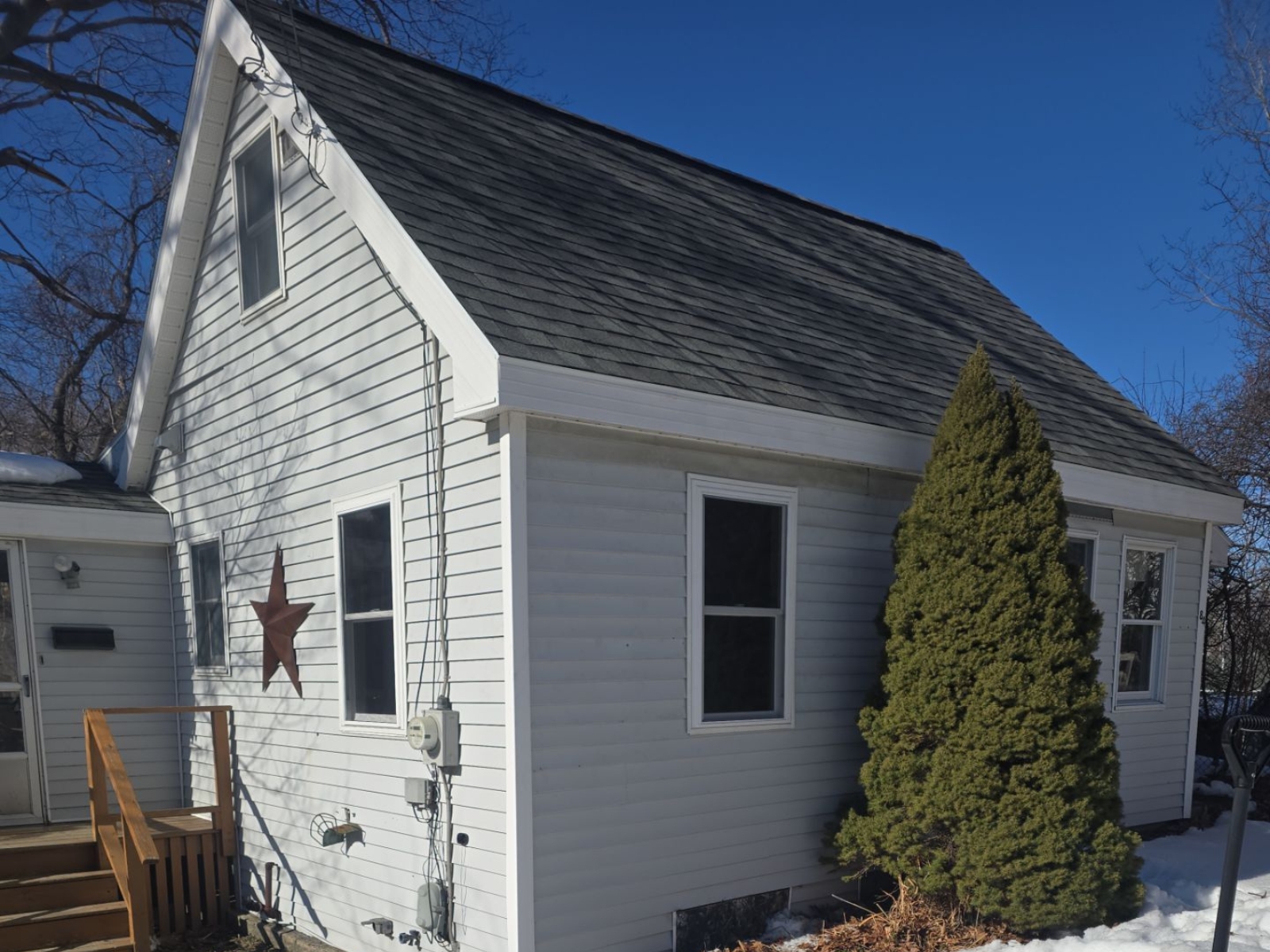
The best asphalt shingle roof is not just about the brand name on the bundle. It is about matching the right product to the home, then installing it with the proper ventilation, underlayment, flashing, and detail work.
Metal Roofs
Metal roofing is a popular option for homeowners and business owners who want a roof that feels durable, clean, and long-lasting.
In Maine and New Hampshire, metal roofs often get attention because of how well they can shed rain and snow when installed on the right roof. They also have a distinct look that can work beautifully on modern homes, farmhouses, coastal properties, barns, garages, camps, and commercial buildings.
Metal roofing may be a good fit for:
- Homes with simple rooflines
- Barns, garages, camps, and outbuildings
- Modern or farmhouse-style homes
- Commercial or utility buildings
- Accent roofs over porches, entries, and dormers
- Homeowners looking for a longer-term roofing option

The two most common options homeowners compare are standing seam metal roofing and exposed fastener metal roofing.
Standing Seam Metal Roofing
Standing seam metal is the clean, vertical-panel roof many people picture on higher-end homes and modern builds.
The panels have raised seams running up the roof, and the fasteners are typically hidden. This gives the roof a sleek appearance while helping protect the connection points from direct weather exposure.
Standing seam metal is often chosen for:
- Long-term durability
- Clean curb appeal
- Strong water-shedding performance
- Snow-shedding potential
- Coastal homes, modern homes, and accent roof areas
It is usually a higher-investment roof than asphalt shingles, so it is not always the automatic best choice. On some homes, it is worth the upgrade. On others, architectural shingles may be the more practical fit.
Exposed Fastener Metal Roofing
Exposed fastener metal roofing is another common metal option.
With this system, the fasteners are installed through the face of the panels and remain visible. It is often more budget-friendly than standing seam and is commonly used on barns, garages, sheds, camps, workshops, and utility buildings.
Exposed fastener metal can be a smart choice for simple structures where function, coverage, and cost matter most.
It can still perform well when installed properly, but it does have more exposed connection points. Over time, the fasteners and washers may need attention as the roof expands, contracts, and weathers.
Metal Roofing for Commercial Buildings
Metal roofing is also common for commercial properties, especially buildings with larger, simpler roof sections.
You will often see metal roofing on:
- Warehouses
- Retail buildings
- Garages and workshops
- Agricultural buildings
- Municipal buildings
- Mixed-use properties
For business owners, metal roofing can be appealing because it covers large areas efficiently, handles tough weather, and gives the building a clean, professional exterior.

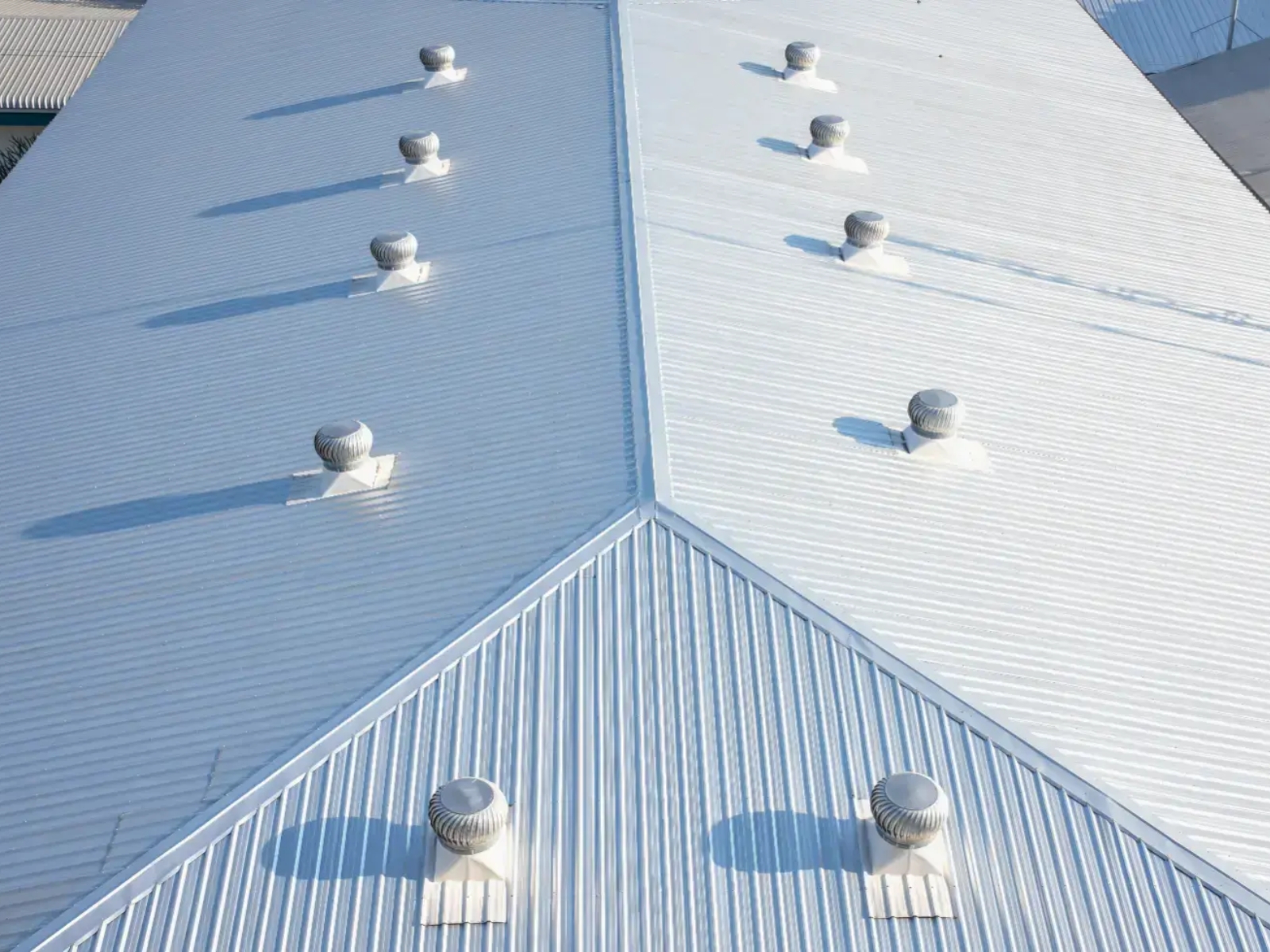
However, commercial roofing services depend heavily on the building itself. Some commercial properties are a great fit for metal roofing. Others may need a flat or low-slope roofing system like EPDM or TPO, especially if the roof does not have enough pitch for traditional panels or shingles.
Is Metal Roofing Better Than Shingles?
Sometimes, but not always.
Metal roofing is durable and attractive, but that does not mean every home needs it.
Shingles may be better if...
- You want a lower upfront cost
- Your roof has many valleys, dormers, or detailed areas
- You prefer a more traditional New England look
- You want a practical roof replacement on a realistic budget
Metal may be better if...
- You want a longer-term investment
- You like the look of vertical metal panels
- Your roofline is simple enough to make metal cost-effective
- You are roofing a barn, garage, camp, business, or accent area
At C.M.L. Roofing & General Contracting, the question is not just, “Is metal better?”
The better question is: Does metal make sense for this roof, this building, and this budget?
Flat and Low-Slope Roofs
Not every roof is steep enough for shingles or metal panels.
Some homes, additions, porches, garages, and commercial buildings have what is called a flat roof or low-slope roof. These roofs may look almost level from the ground, but they should still have enough slope to move water toward drains, scuppers, or edges.
On a steep roof, rain and snow naturally run downward. On a low-slope roof, water moves more slowly. That means the roofing system has to be designed differently.
This is where materials like EPDM rubber roofing and TPO roofing come in.
EPDM Rubber Roofing
EPDM is a rubber roofing membrane commonly used on flat and low-slope roofs.
It is often seen on:
- Porch roofs
- Additions
- Garages
- Dormers
- Commercial buildings
- Low-slope sections of residential homes
EPDM is popular because it is flexible, durable, and well-suited for areas where traditional shingles are not the right fit.
For Maine and New Hampshire homes, EPDM can be especially useful on older homes with additions or small roof sections that do not have enough pitch for standard shingles.
TPO Roofing
TPO is another flat roofing membrane commonly used on commercial and low-slope roofs.
It is often chosen for:
- Commercial buildings
- Larger flat roof areas
- Low-slope additions
- Retail or office buildings
- Properties where energy efficiency may be a consideration
TPO has a clean, bright appearance and is often used on commercial properties because it can cover larger roof areas efficiently.
Like EPDM, TPO is not about creating a traditional shingle-roof look. It is about protecting a roof shape that needs a different kind of system.
Why Shingles Usually Do Not Belong on Flat Roofs
One of the biggest mistakes homeowners can make is treating a low-slope roof like a regular pitched roof.
Asphalt shingles are designed for roofs where water can shed properly. When shingles are installed on a roof that is too flat, water can sit, back up, or work its way underneath the roofing material.
That can lead to leaks, soft decking, interior stains, and repeated repair issues.
So when a roof is low-slope, the question should not be, “Can we make shingles work?”
The better question is: What roofing system is actually designed for this slope?
With flat and low-slope roofs, the details around seams, edges, flashing, drains, skylights, walls, and transitions matter a lot. Water will always look for the weakest point, so every connection has to be handled carefully.
Specialty Roofing Materials
When people research the different types of roofs, they often come across materials like slate, cedar shake, clay tile, and synthetic roofing.
These roofing materials can be beautiful, but they are not always the most practical fit for every home, budget, or climate.
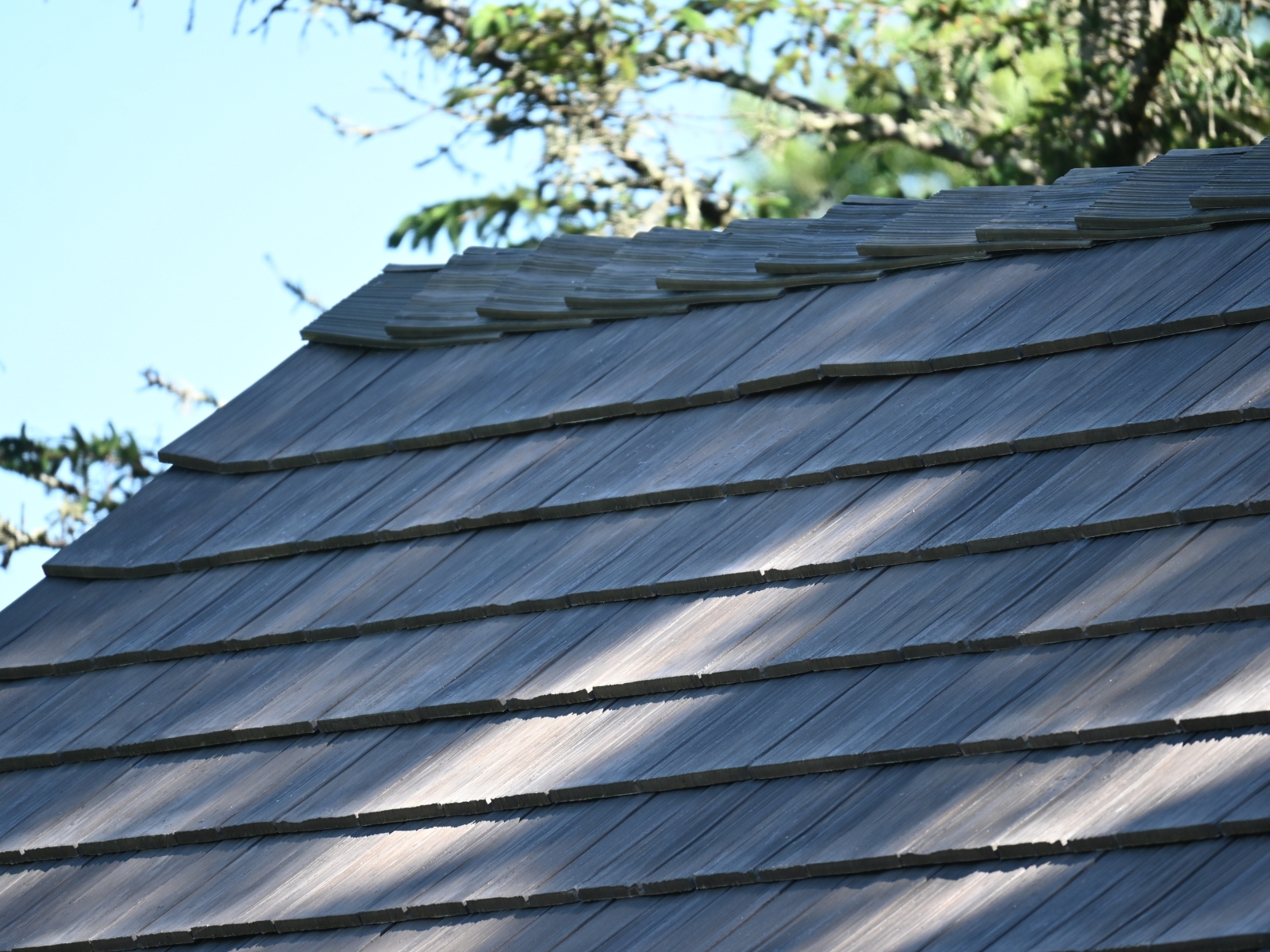
Here is the quick version.
| Specialty Roof Type | What to Know |
|---|---|
| Slate roofing | Classic, beautiful, and long-lasting, but heavy, expensive, and highly specialized. Best suited for historic, estate-style, or high-end homes built to support it. |
| Cedar shake roofing | Warm, natural, and full of New England character, but higher maintenance in damp, shaded, coastal, or tree-covered areas. |
| Synthetic or composite roofing | Designed to mimic slate or cedar shake while reducing some weight or maintenance concerns. Worth exploring when curb appeal is a major priority. |
| Clay and concrete tile roofing | Common in some regions, but not typically the first choice for most Maine or New Hampshire homes due to weight, style, and climate fit. |
Specialty roof types have their place, but they should be chosen with the whole home in mind.
For many Maine and New Hampshire homeowners, architectural shingles, premium shingles, metal roofing, EPDM, or TPO will be the more practical fit.
Quick Roof Material Comparison
Every roof type has a place. The key is knowing what each material does best.
Here’s a quick comparison of the most common types of roofing materials homeowners may consider in Maine and New Hampshire.
| Roof Material | Best For | Cost Level | Maine & NH Fit |
|---|---|---|---|
| Architectural shingles | Most residential homes | $$ | Great all-around option for value, curb appeal, and weather performance |
| Premium shingles | Homes where appearance matters | $$$ | Strong fit for visible rooflines, coastal homes, and higher-end curb appeal |
| Standing seam metal | Long-term durability and clean design | $$$$ | Excellent when the roof shape and budget make sense |
| Exposed fastener metal | Garages, barns, camps, utility buildings | $$–$$$ | Practical for simple structures and larger roof sections |
| EPDM rubber roofing | Flat and low-slope roofs | $$–$$$ | Strong choice for porches, additions, garages, and commercial sections |
| TPO roofing | Commercial and larger low-slope roofs | $$$ | Good fit for many flat commercial roofing needs |
| Slate roofing | Historic or high-end homes | $$$$ | Beautiful, but heavy and highly specialized |
| Cedar shake | Rustic, coastal, or classic homes | $$$$ | Great character, but more maintenance in wet or shaded areas |
| Synthetic roofing | Specialty looks with modern materials | $$$–$$$$ | Worth considering for homeowners who want slate or shake-style curb appeal |
The best roofing material is not always the most expensive one. It is the one that fits the roof shape, budget, building style, and weather exposure.
Common Roof Shapes and Styles
Now that we’ve covered roofing materials, let’s talk about roof shapes.
Your roof shape affects how the home looks, how water drains, how snow sheds, and how complicated the roof may be to install or replace.
Here are some of the most common roof styles homeowners will see in Maine and New Hampshire.
Gable Roofs
A gable roof has two sloped sides that meet at a peak, creating a triangle shape on each end.
Gable roofs are common on Capes, colonials, ranches, garages, and many classic New England homes. They are simple, clean, and effective at shedding rain and snow.
Hip Roofs
A hip roof slopes down on all four sides.
This style can offer a balanced look and may perform well in windy areas because there are fewer large vertical ends exposed to the weather.
Gambrel Roofs
A gambrel roof has two slopes on each side, with the lower slope being steeper than the upper slope.
This is the classic barn-style roof, but it can also appear on Dutch colonial homes, garages, carriage houses, and New England properties with more historic character.
Flat and Low-Slope Roofs
Flat roofs are not perfectly flat, but they have a much lower pitch than a standard roof.
You will often see them on commercial buildings, porch additions, garages, dormers, and modern homes. These roofs usually need materials like EPDM or TPO because shingles are not designed for slow-draining roof sections.
Shed Roofs
A shed roof has one single slope.
It is simple, modern, and often used on additions, porches, dormers, garages, and contemporary homes. Metal, shingles, or flat-roof membranes may all be considered depending on the slope.
Saltbox Roofs
Saltbox roofs are a classic New England shape.
They have an uneven design, with one side of the roof extending much farther down than the other. This gives the home a historic, coastal, or colonial feel.
Complex Rooflines
Many homes do not fit neatly into one roof style.
They may have dormers, valleys, skylights, chimneys, additions, bump-outs, and multiple roof sections all meeting together.
These details can make a home beautiful, but they also create more places where water, snow, and ice need to be managed.

With complex rooflines, the material matters, but the flashing, ventilation, underlayment, and installation details matter even more.
CML’s local take: A simple roof is usually easier to price, install, and maintain. A more complex roof can still be a great roof, but it needs a sharper eye and better detail work.
In Maine and New Hampshire, valleys, dormers, chimneys, skylights, and low-slope tie-ins are the places where small roofing mistakes can become big problems later.
Why Maine and New Hampshire Weather Changes the Conversation
A roof that works in one part of the country may not be the best roof for a home in Maine or New Hampshire.
Here, your roof has to deal with a little bit of everything:
- Snow
- Ice
- Wind
- Heavy rain
- Coastal moisture
- Shade
- Moss
- Freeze-thaw cycles
- Sudden temperature swings
- Long winters
- Wet springs
That is why choosing between the different types of roofs is not just about looks or price. It is about how the whole roofing system handles local weather.
Snow and Ice
Snow is heavy. Ice is stubborn. Together, they can test the weakest parts of a roof.
From older homes needing roofing in Portland, Maine to coastal properties needing roofing in South Portland, Maine, roof slope, attic ventilation, insulation, underlayment, and flashing all play a role in how well a roof handles winter weather.
A good roofing material helps, but it cannot do all the work by itself.
Wind and Nor’easters
Maine and New Hampshire homes can see strong winds, especially near the coast, on open lots, and during major storms.
That makes proper installation extremely important. Shingles, metal panels, flashing, drip edge, and ridge details all need to be installed with wind and water in mind.
For homes in exposed areas like Cape Elizabeth or Portsmouth, New Hampshire, the small details around edges, seams, valleys, and transitions can make a major difference.
Coastal Moisture
Homes near the water face extra moisture, salt air, and wind-driven rain.
For coastal properties, the right roof type matters, but so does the way every edge, seam, and transition is sealed and protected.

This is especially important for homeowners comparing roof options in Southern Maine and Seacoast New Hampshire, including communities like Strafford, New Hampshire.
Moss, Shade, and Tree Coverage
Many New England homes sit near trees or wooded areas.
Shade can keep roof surfaces damp longer, which may lead to moss, algae, staining, or faster wear over time.
This does not always mean you need a different roof material, but it does mean maintenance and roof design should be part of the conversation.
For wooded neighborhoods, lakeside homes, and coastal properties, roof ventilation, sunlight exposure, tree coverage, and drainage all deserve attention.
The Real Lesson: Material Is Only Part of the Roof
A strong roof also depends on:
- Proper ventilation
- Quality underlayment
- Correct flashing
- Clean water drainage
- Ice and water protection
- Solid decking
- Careful installation around chimneys, skylights, valleys, and walls
That is why the “best roof type” is not just a material choice.
It is a system choice.
At C.M.L. Roofing & General Contracting, we look at how each roof will actually perform in Maine and New Hampshire weather. Whether we are helping with a residential roof replacement, commercial roofing project, or exterior remodeling need, the goal is to build a roof that is ready for the seasons ahead.
What Type of Roof Is Best for Your Home?
There is no one-size-fits-all answer to the best roof type.
The right choice depends on your home, your budget, your roof slope, and what you care about most.
Here is a simple way to think through the most common options.
| Homeowner Priority | Roof Types to Consider | Why It May Make Sense |
|---|---|---|
| Best overall value | Architectural shingles | A strong balance of cost, curb appeal, and performance for many homes |
| Best curb appeal | Premium shingles or standing seam metal | Adds more texture, style, and visual impact |
| Best long-term durability | Standing seam metal, slate, or synthetic roofing | Higher investment, but strong long-term potential |
| Best for flat or low-slope roofs | EPDM or TPO | Designed for roof areas where shingles are not the right fit |
| Best for garages, barns, and camps | Exposed fastener metal or architectural shingles | Practical, durable, and cost-conscious |
| Best for classic New England homes | Architectural shingles, premium shingles, slate, or cedar shake | Matches the style of many Capes, colonials, farmhouses, and coastal homes |
| Best for commercial buildings | Metal roofing, EPDM, or TPO | Depends on slope, drainage, building use, and roof size |
| Best for coastal properties | Premium shingles, architectural shingles, or standing seam metal | Strong choice when paired with proper flashing, ventilation, and installation details |
For many homeowners in Maine and New Hampshire, architectural shingles are still the most practical choice. For others, metal roofing may be worth the added investment. And for any flat or low-slope section, the best roof type is usually a membrane system like EPDM rubber roofing or TPO roofing.
The easiest way to narrow it down is to ask:
What is the best roof for this home?
Roofing Options CML Offers
At C.M.L. Roofing & General Contracting, we work with several different roof types because every home and building does not need the same solution.
Some homeowners want the best value. Some want the most curb appeal. Some need a roofing system for a flat section, commercial building, garage, barn, or coastal property.
Here is a quick look at the roofing options CML offers.
| CML Roofing Option | Best Fit |
|---|---|
| IKO architectural shingles | Value-focused shingle roof replacement |
| Owens Corning shingles | Dependable performance and curb appeal |
| CertainTeed Landmark shingles | Upgraded architectural shingle look |
| CertainTeed Landmark Pro shingles | Heavier, more dimensional premium shingle option |
| Standing seam metal roofing | Clean, high-end metal roofing with hidden fasteners |
| Exposed fastener metal roofing | Garages, barns, camps, utility buildings, and certain commercial projects |
| EPDM rubber roofing | Flat and low-slope porches, additions, garages, and commercial sections |
| TPO roofing | Commercial and larger low-slope roof areas |
The goal is to match the roof to the home, not force every homeowner into the same product.
Sometimes that means architectural shingles. Sometimes it means premium shingles. Sometimes it means metal. Sometimes it means EPDM or TPO.
The best roof is the one that fits the building, protects it properly, and makes sense long after the installation is complete.
How to Choose the Right Roof Type
Comparing the different types of roofs gets easier when you stop looking for the “best” roof overall and start looking for the best roof for your specific home.
Here are the biggest things to consider:
1. Start With the Roof Slope
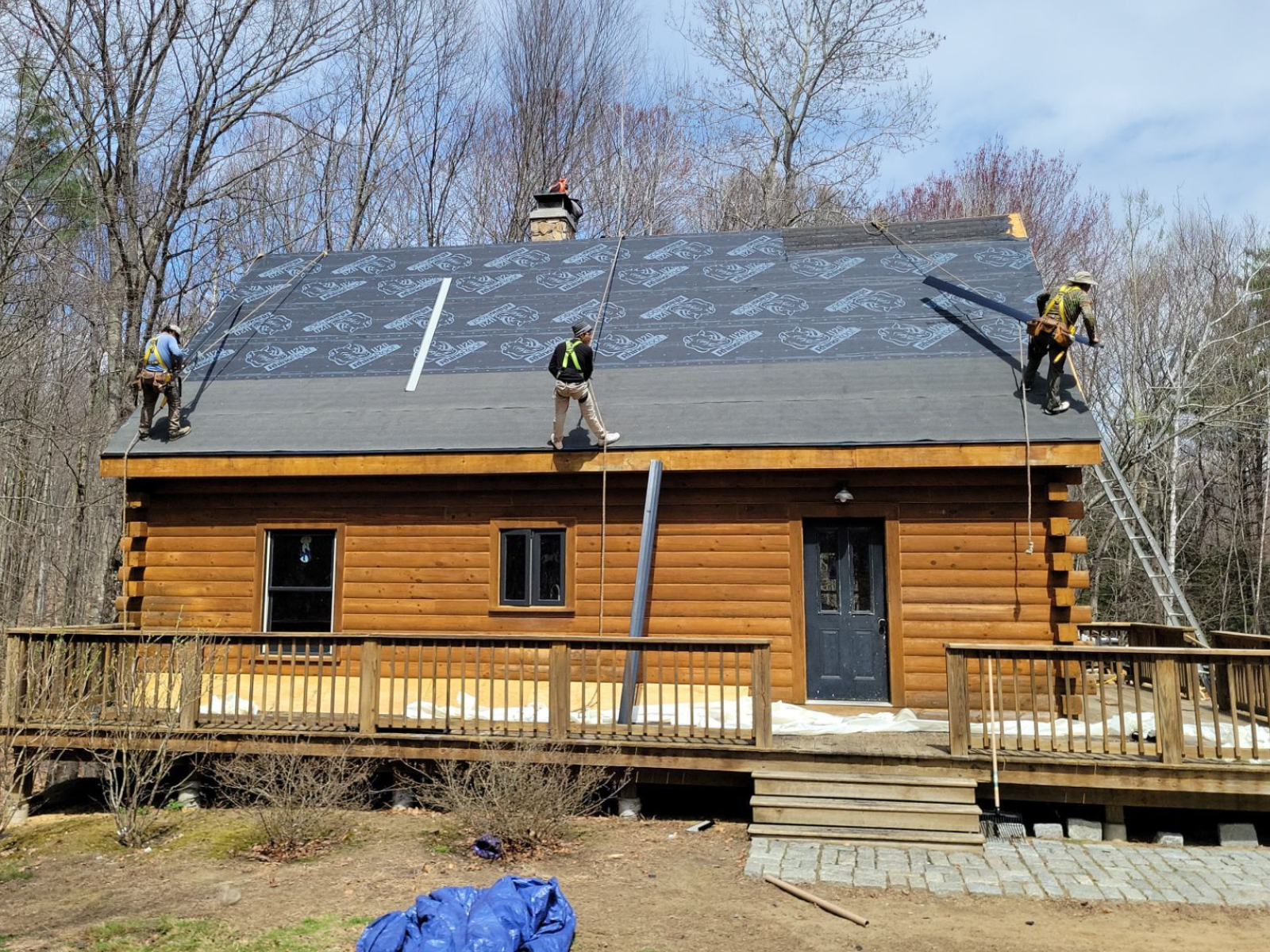
A steep roof can usually handle shingles or metal because water drains quickly. A flat or low-slope roof needs a different system, often EPDM or TPO, because water moves more slowly.
2. Think About Your Budget
Architectural shingles are often a strong middle-ground choice for homeowners who want value, curb appeal, and dependable performance. Premium shingles and standing seam metal usually require a higher investment, but they may make sense for homeowners who want a more elevated look or longer-term option.
If budget is part of the decision, CML also offers roof financing options to help homeowners plan the project more comfortably.
3. Consider How Long You Plan to Stay
If you plan to sell in the next few years, your priorities may be different than someone planning to stay in the home for decades. A practical architectural shingle roof may be the right move for resale and budget balance. A premium shingle or metal roof may make more sense if you want to invest in the home long-term.
4. Match the Roof to the Home’s Style
A classic New England colonial may look great with architectural shingles or premium shingles. A modern farmhouse may be a strong fit for standing seam metal. A barn, garage, or camp may call for exposed fastener metal.
5. Do Not Ignore the Details
Roofing material gets most of the attention, but the details are what protect the home.
- Ventilation
- Flashing
- Underlayment
- Ice and water protection
- Valleys
- Chimneys
- Skylights
- Roof-to-wall transitions
- Drainage
A great roof is not just a product. It is a complete roofing system.
FAQs About the Different Types of Roofs
What are the main types of roofs?
The main types of roofs can be grouped into two categories: roofing materials and roof shapes.
Common roofing materials include asphalt shingles, architectural shingles, metal roofing, EPDM, TPO, slate, cedar shake, and synthetic roofing.
Common roof shapes include gable, hip, gambrel, flat, shed, saltbox, and mansard roofs.
What is the most common type of roof?
For residential homes, asphalt shingles are one of the most common roofing materials.
In Maine and New Hampshire, many homeowners choose architectural shingles because they offer a strong balance of cost, curb appeal, and weather performance.
What type of roof is best for Maine homes?
For many Maine homes, architectural shingles are a practical and reliable choice.
Metal roofing, premium shingles, EPDM, and TPO may also make sense depending on the home’s slope, location, style, budget, and exposure to snow, ice, wind, shade, or coastal moisture.
What type of roof is best for New Hampshire homes?
Many New Hampshire homes are well-suited for architectural shingles, premium shingles, or metal roofing.
For flat or low-slope roof sections, EPDM or TPO may be the better option.
Are metal roofs better than shingles?
Metal roofs can be a great choice, but they are not automatically better for every home.
Metal may make sense for long-term performance, simple rooflines, barns, garages, camps, commercial buildings, and accent areas. Shingles may be better for homeowners who want a more traditional look, lower upfront cost, or practical roof replacement option.
What is the best roof type for a flat roof?
Flat and low-slope roofs usually need a membrane roofing system rather than shingles.
Common options include EPDM rubber roofing and TPO roofing.
What is the most affordable type of roof?
Asphalt shingles are typically one of the most affordable roofing options for residential homes.
Architectural shingles often provide a strong balance of price, appearance, and performance, which is why they are so common for roof replacement projects.
What roof type lasts the longest?
Some of the longest-lasting roof types include standing seam metal, slate, and certain synthetic roofing products.
However, lifespan depends on more than material alone. Installation quality, ventilation, flashing, maintenance, weather exposure, and roof design all affect how long a roof lasts.
Compare Roof Types With a Local Maine & New Hampshire Roofing Contractor
Choosing between the different types of roofs does not have to feel overwhelming.
For some homes, architectural shingles are the perfect fit. For others, premium shingles, metal roofing, EPDM, or TPO may make more sense.
At C.M.L. Roofing & General Contracting, we help homeowners and business owners compare roof options in a practical way.
No pressure. No one-size-fits-all answer. Just honest guidance based on the building, the budget, and what will actually perform well in Maine and New Hampshire.
Whether you are replacing an aging shingle roof, considering metal roofing, dealing with a flat roof section, or simply trying to understand your options, our team can help you choose the roof type that makes the most sense.
You can also read what local customers have shared in our Maine Google reviews and New Hampshire Google reviews.
Explore Roofing Services View Financing Options Contact CML Roofing